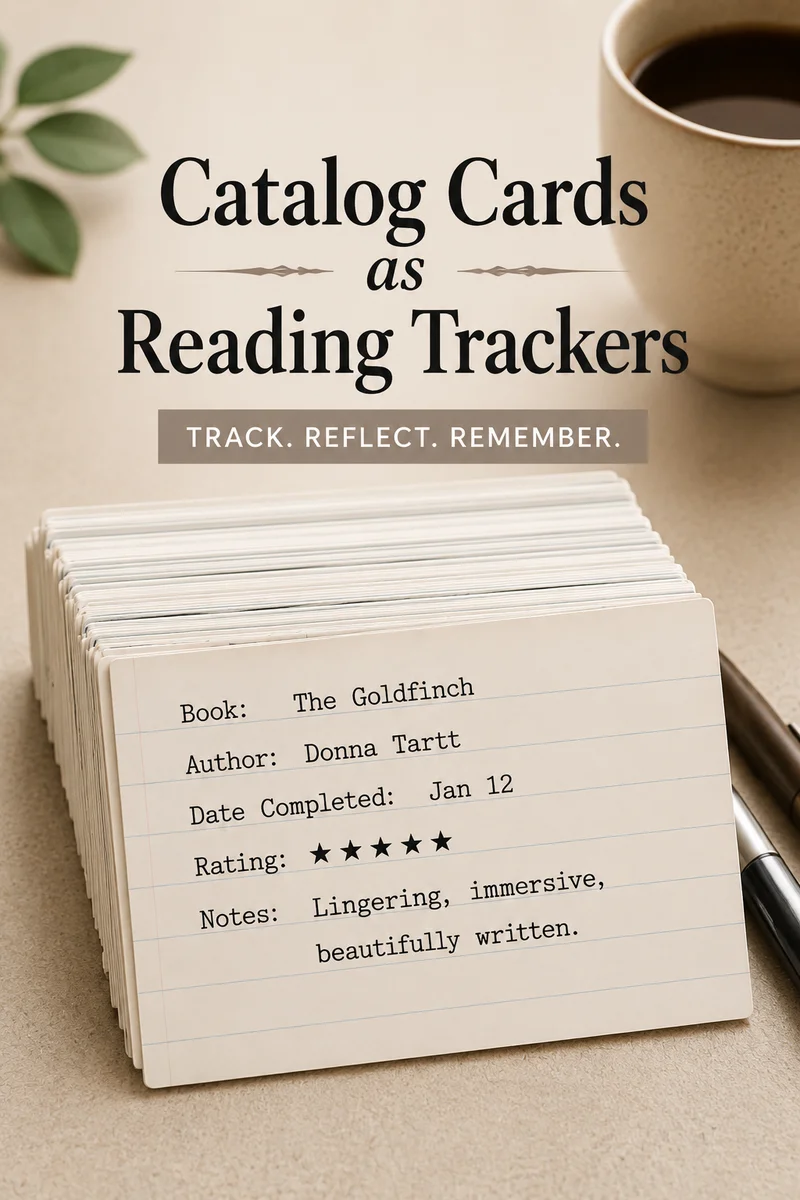
Reading apps are fine. They remember what you finished and let you set a goal for January. But they don't hold the weight of a year. A small stack of catalog cards — one per book, filled out in your own hand — does. Using catalog cards as reading trackers is one of those ideas that sounds fussy until you try it, at which point it becomes something you wonder how you read without.
Want to make your own? Try the free generator
Why Catalog Cards Work as Reading Trackers
Digital reading logs tend to collect data: titles, dates, star ratings. A catalog card collects a moment. You finish a book at eleven o'clock on a rainy Tuesday and you pull out a blank card and write down what you actually thought. The small format forces you to be honest — there isn't room for a hedge or a hedge dressed up as nuance. What you write on a catalog card is what you meant.
There's also something satisfying about the physical accumulation. At the end of the year, your reading life fits in a box you can hold. You can riffle through it, pull out a card from March, and remember the afternoon you finished that novel in a single sitting. No algorithm curates that for you.
What to Put on Each Card
Start with the basics that a traditional catalog card already handles well: author (last name first), full title, and publication year. Then add what makes it a reading tracker rather than just a reference card. Useful fields include:
- Date finished — not just the year. Month and day give you a reading rhythm to look back on.
- Your rating — a star out of five, a letter grade, or a simple yes/no on whether you'd reread it.
- One honest sentence — the thing you'd say if a friend asked. Not a summary; a reaction.
- How you got it — library, gift, bought new, secondhand. Interesting patterns emerge over time.
- Who recommended it — especially useful when a recommendation led somewhere unexpected.
The free catalog card generator lets you print cards with a clean layout that already handles author, title, and the standard catalog fields. Print a batch and keep a few blank ones on your nightstand so a finished book is never more than a minute away from being logged.
Set Up a System That Matches How You Read
The most common approach is a single chronological file — cards in the order you finished books, with a dated tab for each month or quarter. This is the easiest to maintain and the most interesting to look back through, because you see how your reading shifted over the year.
If you read across many genres and tend to want to find "the mystery I loved last spring," add a genre tab at the back and keep a duplicate card filed there. One card to log the read, one card to find it later. It doubles your card usage but halves your searching.
A third option is a want-to-read section at the front of the box, where incoming recommendations live until the book is actually finished. When you finish it, move the card to the read section and fill in your notes on the back. This turns your tracker into a TBR list and a reading log in one box.
Reading Challenges and Annual Goals
If you do a reading challenge — fifty books in a year, one per genre, a bingo card from your local library — a physical card tracker makes it easy to see at a glance where you stand. Label your divider tabs with challenge categories and file each card as you finish. Pull out the box in September and you'll know exactly which bingo square you're missing without opening an app.
For a yearly reading goal, a simple count card at the very front of the box does the job: a small tally card you mark each time you finish a book. Crossing off hash marks by hand is more satisfying than watching a number increment on a screen, though neither explanation quite captures why.
Sharing and Recommending
One underrated feature of a physical reading tracker is that it's easy to share. When a friend asks what you've been reading lately, you pull out the box and hand it to them. They flip through your cards and find something that catches their eye. A reading log that lives on your phone stays on your phone; one that lives in a box on your desk becomes part of a conversation.
If you belong to a book club, catalog cards are a natural fit. Each member keeps their own box, and when the group meets, everyone brings their card for the title under discussion. Compare notes on a three-by-five card and you'll find the conversation starts faster than it does when everyone is scrolling to find their Goodreads review.
Getting Started Today
You don't need to backfill every book you've ever read. Start with the book you're reading right now. Print a stack of cards from the generator, fill one out when you finish, and file it in the box. Repeat next month. By December you'll have a small, honest record of the year in books — something no algorithm could have built for you.
Helpful supplies for your reading tracker
Some links on this page are affiliate links. If you purchase through them, we may earn a small commission at no extra cost to you.
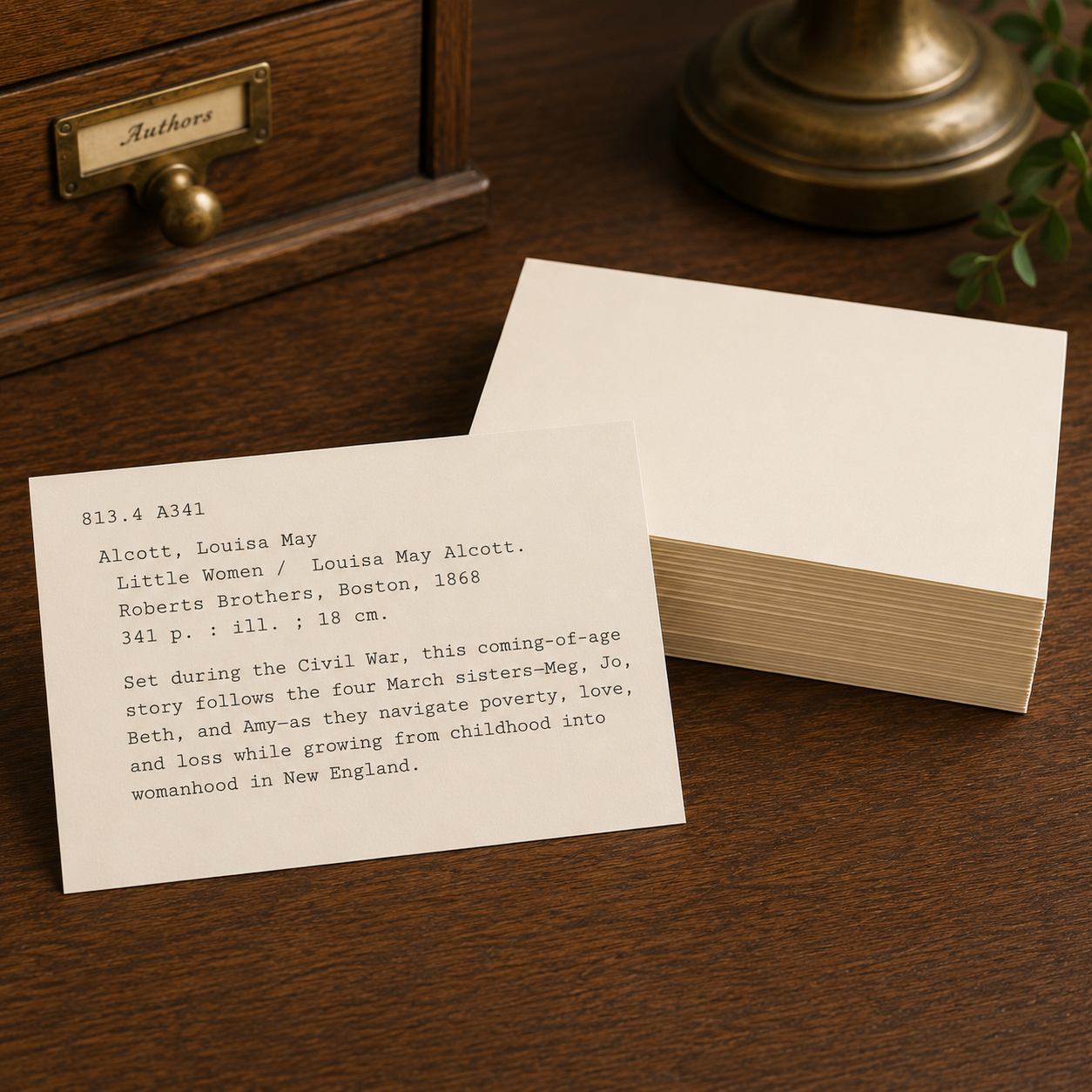
Heavy blank cards for printing catalog cards with a warm vintage look.

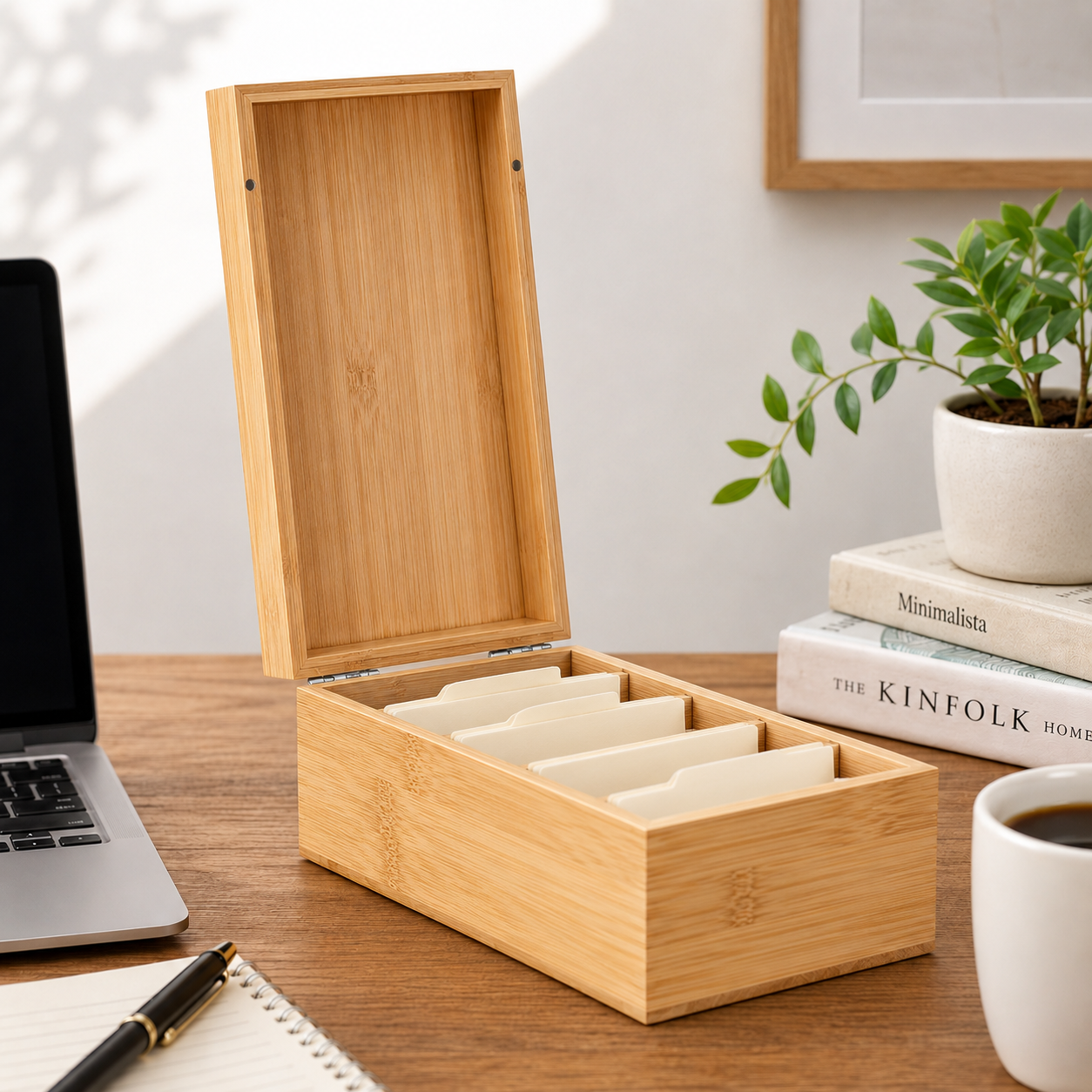
A clean desktop box for sorting larger catalog card collections.
Ready to start tracking your reading?
Generate printable catalog cards for every book you finish this year.
Open the generator