
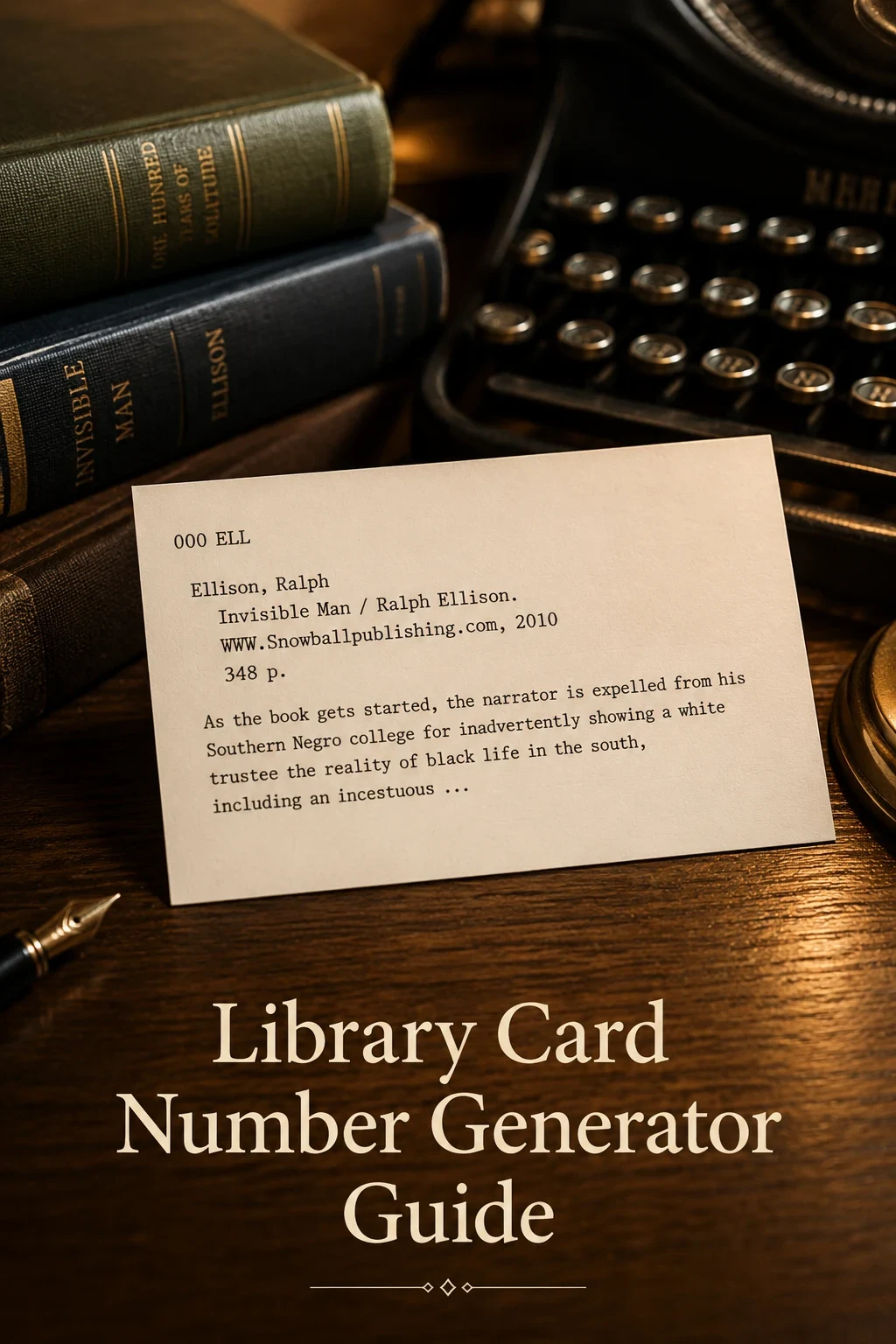
If you have ever stood in front of a private library and wondered "where exactly is that book?", you have hit the limit of memory-based organization. A simple numbering system fixes it. The catch is that most home library numbering systems collapse within a year because they are too complicated. A good library card number generator gives you something you can actually keep up with - a unique, repeatable number that points to the right shelf without making you feel like a librarian-in-training.
Want to make your own? Try the free generator
Why Number Your Books at All?
Card catalogs without numbers are pretty. Card catalogs with numbers are useful. Numbering does three things at once:
- Tells you exactly which shelf and section the book lives on
- Lets you re-shelve correctly after lending or moving
- Makes lost books obvious - a missing number leaves a visible gap
Three Numbering Systems That Actually Work
You do not need the Dewey Decimal System. For most private collections, one of these three is enough:
- Sequential - just number books 0001, 0002, 0003 in the order you acquired them. Simple and unbreakable.
- Section + sequence - a two-letter section code plus a number. FIC-0042 for fiction, NAT-0007 for nature.
- Dewey-lite - a shortened, three-digit version of the Dewey system, useful if you want shelves grouped by topic.
Pick one before you start. Switching halfway through a 500-book catalog is the most common reason these projects fail.
What Makes a Good Number?
A good library card number is short, sortable, and unique. Some quick rules:
- Use leading zeros so 0042 sorts before 0421
- Keep total length to seven characters or fewer
- Avoid letters that look alike (no I/1, no O/0)
- Never reuse a number, even if a book is removed
Using a Library Card Number Generator
A free library card number generator handles the hard parts for you. You set a prefix, the starting number, and the padding (how many digits), and it produces unique numbers in order. Generate them in batches when you bring in new books, and write the number directly onto the catalog card.
Where to Put the Number
On the card itself, the number belongs in the upper-left corner - the same spot real libraries use. On the book, write the number on a small, removable label inside the back cover, or use a pencil mark on the inside front flap. Avoid stickers on the spine for any book you would want to resell.
Maintaining Your System
The hardest part is consistency, not numbering. Two simple habits keep yours alive:
- Generate the next number the same day you bring a book home
- Keep a running text file of "last number used" so you never duplicate
Done that way, your numbering will outlast every cloud-backup app you have ever signed up for.
Helpful supplies for printable catalog cards
Some links on this page are affiliate links. If you purchase through them, we may earn a small commission at no extra cost to you.
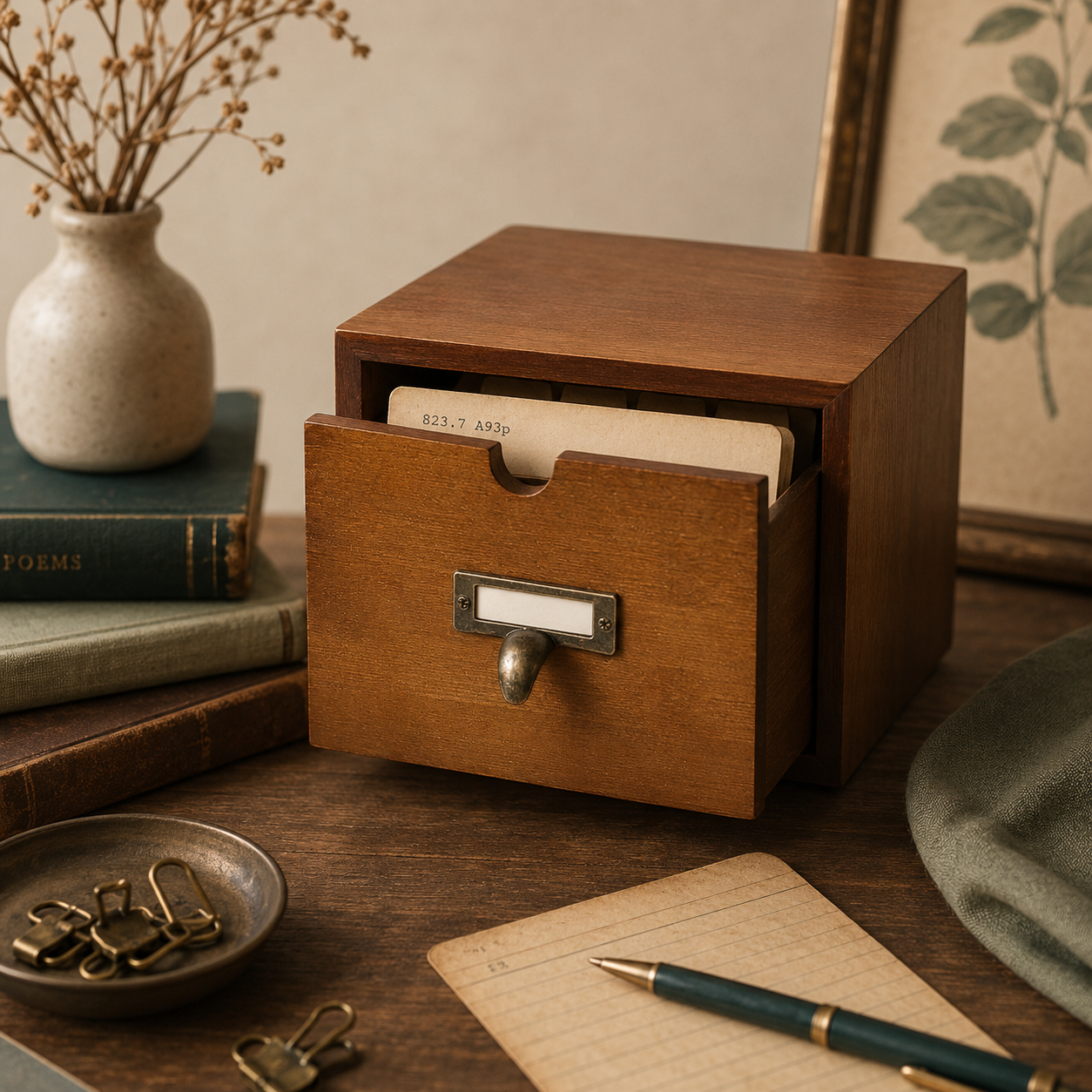
Wooden card catalog drawer with dividers for storing printed catalog cards.

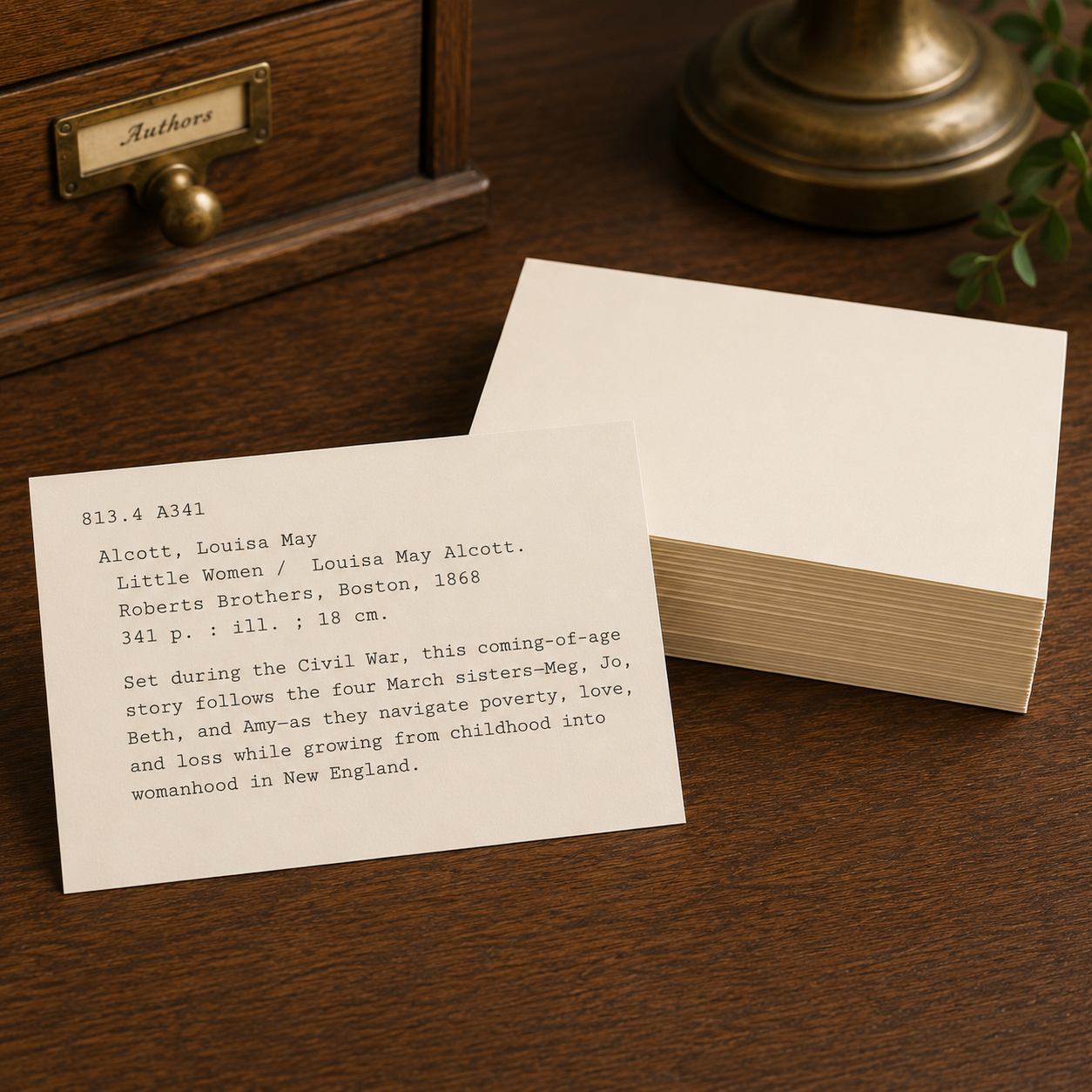
Heavy blank cards for printing catalog cards with a warm vintage look.
Number your collection
Use the free library card number generator to create your first batch of unique numbers.
Open the generator