
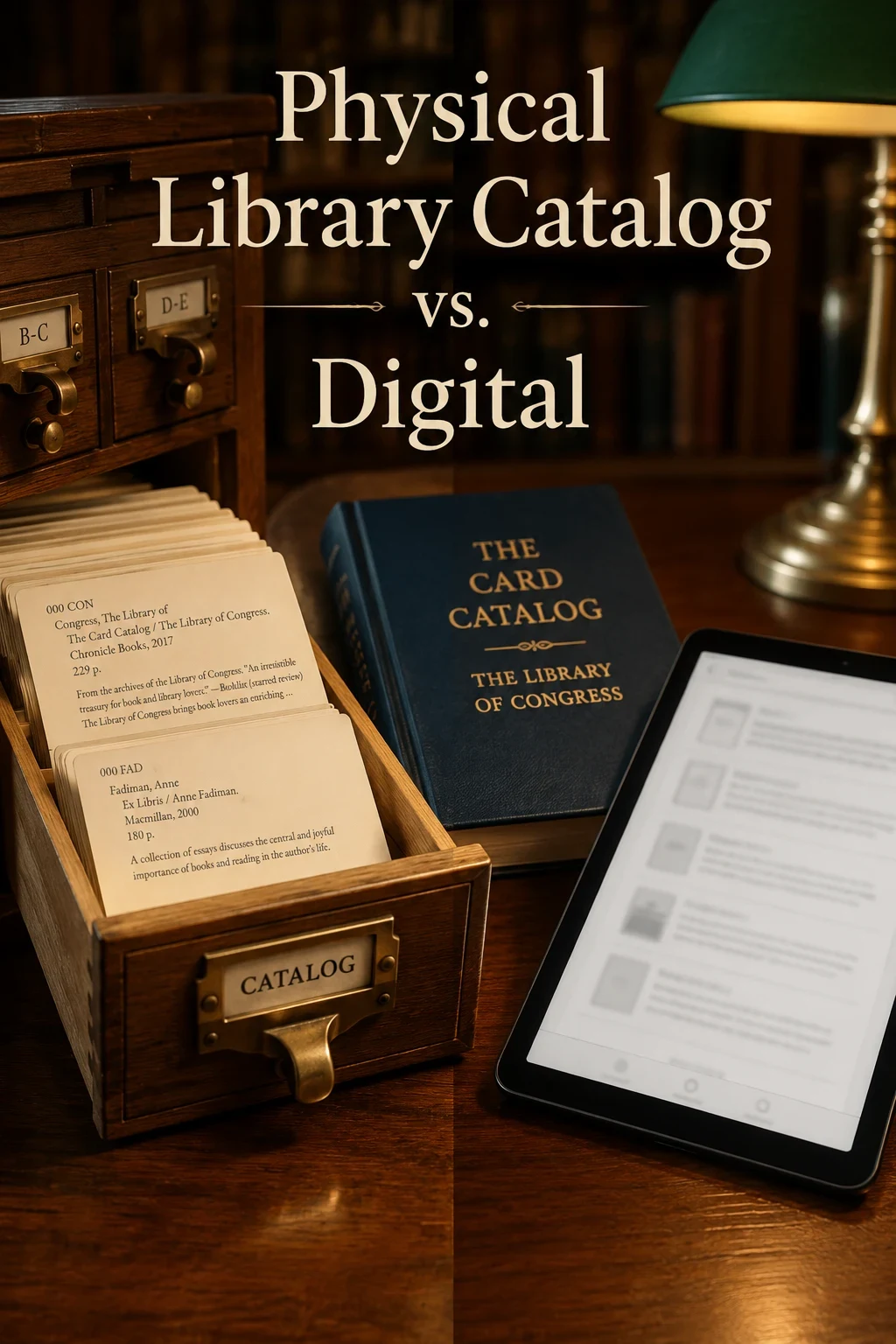
For twenty years it looked like the card catalog was finished. Apps and spreadsheets seemed to make paper records obsolete. Then something quietly shifted. Home libraries, classroom shelves, and even small archives are putting wooden card drawers back into use. The physical library catalog is having a moment - and the reasons say something interesting about how people actually want to live with their collections.
Want to make your own? Try the free generator
Why Apps Lost Some of Their Appeal
Digital catalogs are powerful, but they share a common failure mode: they live behind a screen. That creates a few small frictions that quietly add up:
- You have to unlock a phone to see what you own
- Apps shut down, change ownership, or paywall features
- Backups are easy in theory, neglected in practice
- Browsing a list never feels like browsing a shelf
What a Physical Catalog Does Better
Cards win on three quiet fronts. First, they are always on. There is no login between you and your collection. Second, they reward casual interaction - flipping through a drawer of cards is a different kind of pleasure than scrolling. Third, they last. A box of cards from twenty years ago is still readable. A SQLite file from twenty years ago might not be.
What Digital Still Does Better
It would be unfair to pretend cards win at everything. Digital catalogs are unbeatable for search, for handling thousands of items, and for sharing a collection across people. If you have a five-thousand-volume reference library, you want a database, not a card drawer.
The Hybrid Approach
The smartest setup most people land on is hybrid. A physical card catalog covers the day-to-day, the visual, and the keepsake side. A simple spreadsheet or app provides search and a backup. A workable hybrid setup looks like this:
- One printed card per item, filed in a real card box
- A photo or scan of each card backed up to cloud storage
- A short spreadsheet with title, author, and shelf code for searching
The cards are the experience. The spreadsheet is the safety net.
Who a Physical Catalog Suits Best
A physical library catalog is the right call if you have under a thousand items, you care about how the room feels, you want a system anyone in the household can use without help, or you simply enjoy the ritual. It is less suited to research libraries and inventory-heavy use cases, where digital is still the obvious answer.
Getting Started
If you are curious, you do not need to commit to a wooden cabinet on day one. Start with a single index card box and a free physical library catalog card generator. Print twenty or thirty cards, file them, and see how it feels for a month. Most people who try it never go back.
Helpful supplies for printable catalog cards
Some links on this page are affiliate links. If you purchase through them, we may earn a small commission at no extra cost to you.
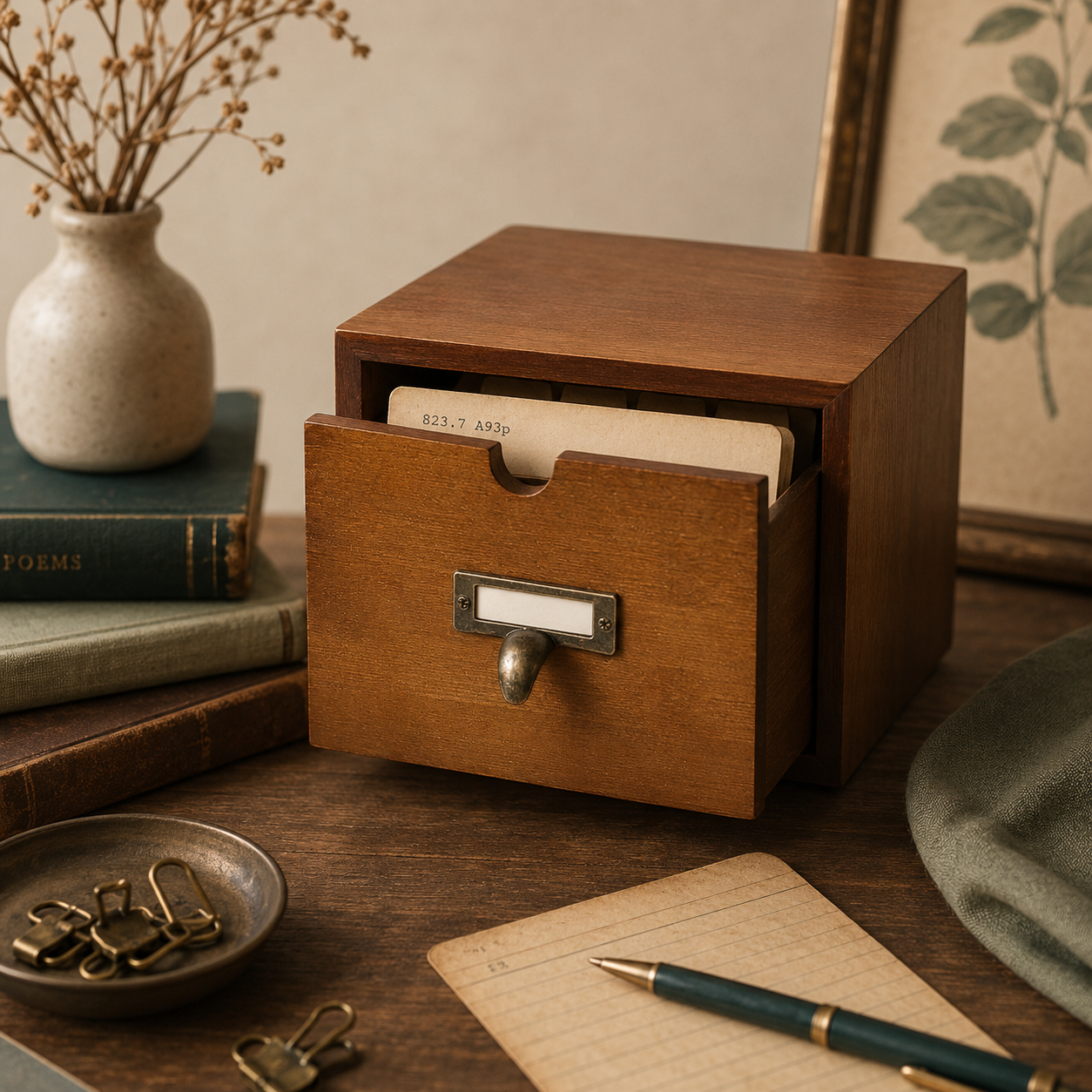
Wooden card catalog drawer with dividers for storing printed catalog cards.

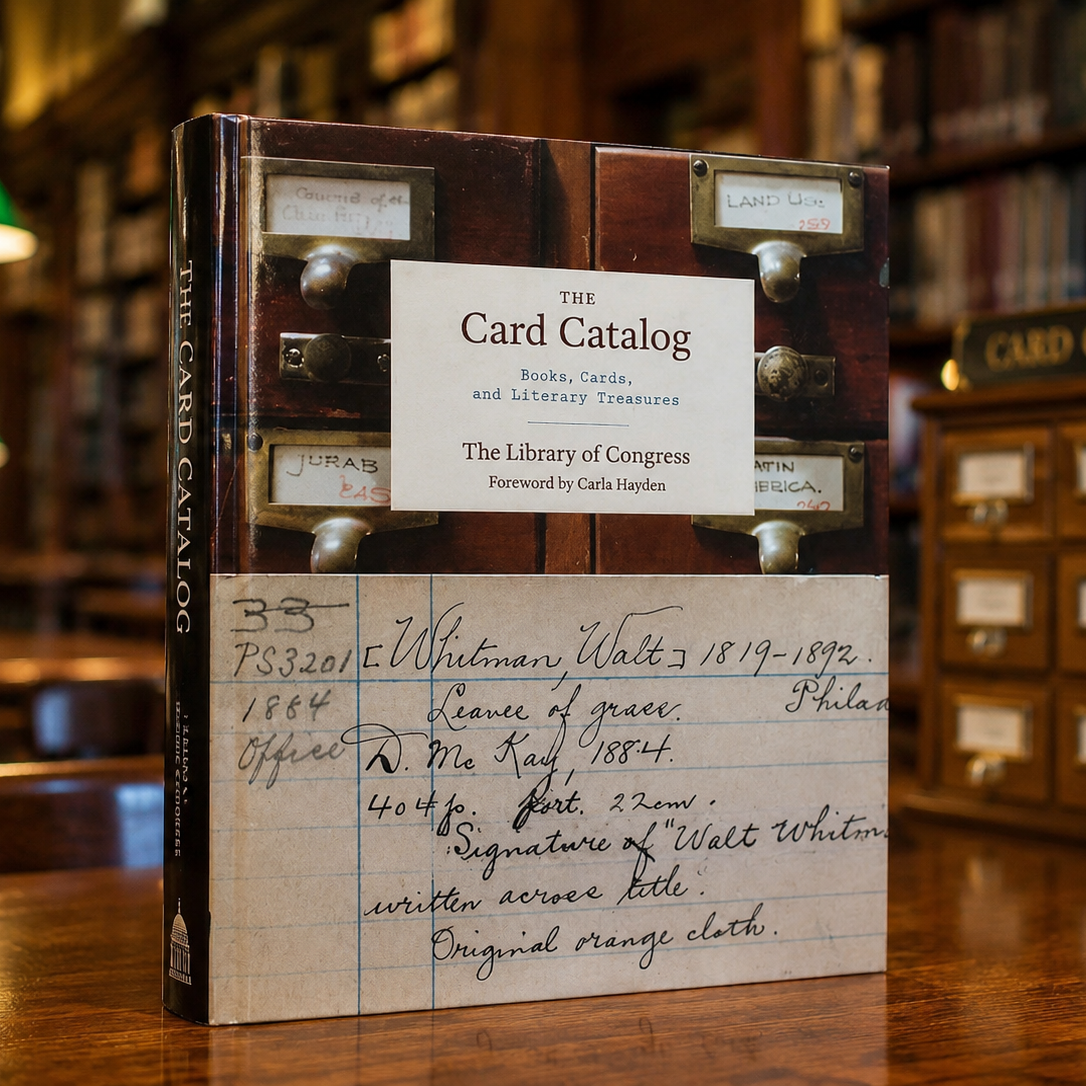
A handsome Library of Congress book for anyone who loves catalog cards.
Try a physical catalog
Generate printable cards and start a real card catalog this weekend.
Open the generator