
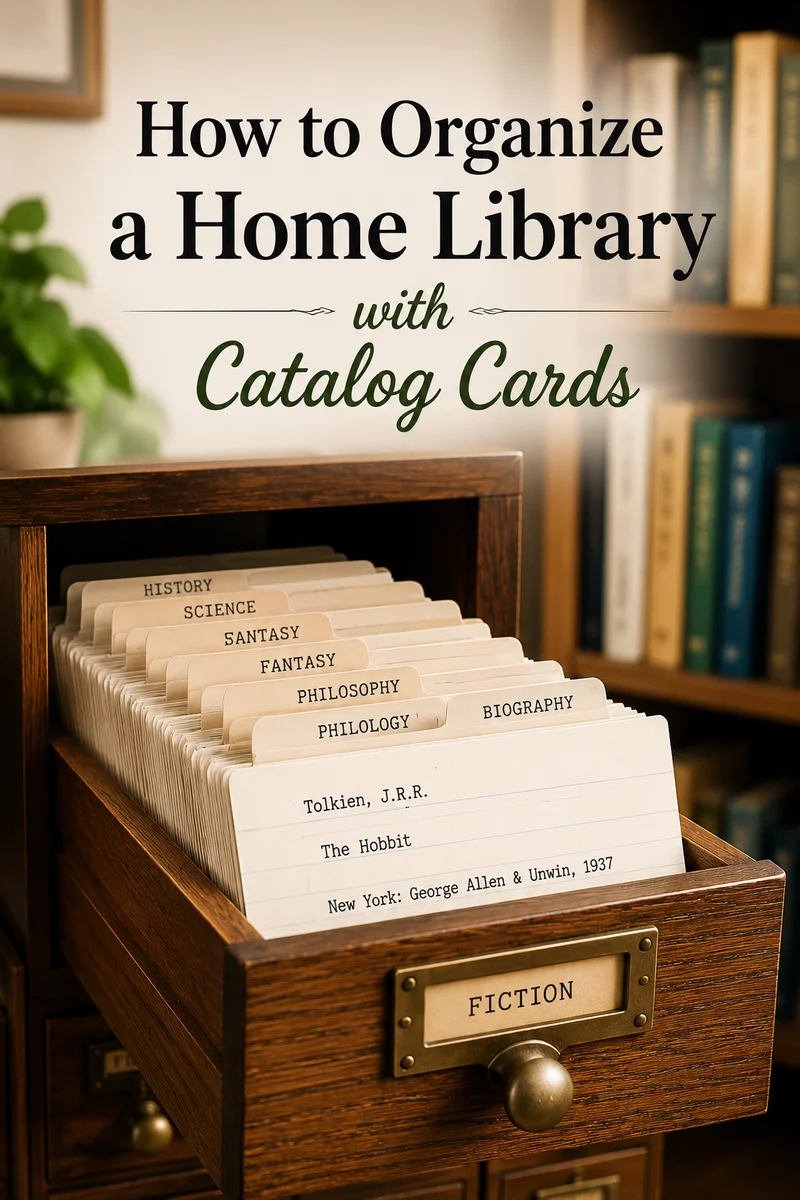
If you love books enough to own more than you can count, you already know the feeling: pulling out three decoys before finding the one you actually wanted, or lending something to a friend and losing track of it entirely. Learning how to organize a home library doesn't have to mean installing software or building a spreadsheet. A small wooden box, a stack of printed catalog cards, and one quiet afternoon is often all it takes to turn a shelf of chaos into a collection you can actually use.
Want to make your own? Try the free generator
Start by Choosing Your Organization Method
Before you print a single card, decide how you want to browse your shelves. Most home libraries work best with one of four approaches: alphabetical by author, sorted by genre, arranged by physical location using a simple shelf code, or grouped by series. There is no wrong answer. The right method is whichever one matches how your brain looks for books. If you tend to think "I want something by Ursula Le Guin," alphabetical by author wins. If you reach for "something in the mystery section," genre sorting is your friend. A location code system works beautifully if your books live in multiple rooms or cases.
If a large share of your collection is series fiction, fantasy sagas, long-running mysteries, or the middle-grade series your kids are working through, series sorting solves a problem the other methods don't: reading order. Give each series its own set of cards, numbered in the order you'd read them rather than alphabetized by title, and note the series name and number clearly on every card, something like "Series: Six of Crows, Book 2 of 2." That way a card box tells you at a glance whether you own book four and are missing book five, and a friend borrowing "book one" can hand back the card so you know instantly which one is out.
The beauty of catalog cards is that you can use more than one system at once. A card filed by author can still include genre notes, a series line, and a shelf code, so you get the flexibility of a real library reference system in a box that fits on your desk.
Create a Catalog Card for Every Book
The heart of the system is one card per book. A good home library catalog card should include the author's last name, the title, the year of publication, and a short note about where the book lives: shelf A, bedroom bookcase, the tall case in the hallway. Optional but wonderful additions include:
- Genre or subject tags
- Series name and number, if it's part of one
- Your star rating or a one-line reaction
- A "borrowed by" line for tracking loans
- An acquisition note, like "gift from Mom, 2019"
Use the free catalog card generator to produce consistent, readable cards with the layout and typography already handled. You can print on standard cardstock or on vintage-style cream cards for a warmer look, then trim to 3x5 inches.
Set Up Your Card Box
Once you have your first batch of cards printed and filled in, you need somewhere to file them. A dedicated card holder keeps your catalog tidy, portable, and genuinely satisfying to use. Alphabetical dividers let you flip to any author or title in seconds. If you are organizing by genre, label one divider per genre and file the cards behind it in alphabetical order within that section.
A small wooden drawer-style holder adds a lovely library aesthetic to a reading nook or desk. A bamboo desktop organizer is a good choice if your collection is larger and you want more room to expand. Either way, the physical act of pulling out a card and seeing your own notes feels quite different from scrolling through a phone app.
Handle Loans and New Arrivals
Two habits will keep your catalog accurate over time. First, when you lend a book, pull its card out of the main file and move it to a small "out on loan" section at the back of the box, or just flip the card so it sticks up. Write the borrower's name and the date on the card. When the book returns, file it back in its proper place. Second, make a new card the same day a book arrives. It takes two minutes and saves the guilt spiral of a hundred uncatalogued books later.
Make the System Your Own
The best thing about a handmade catalog is that it reflects how you actually read. Color-code the cards by genre with a dot of ink. Add a small sticker when you finish a book. Write a favorite quote in the notes field. Over time your card catalog becomes a quiet record of your reading life, not just a reference tool but something worth leafing through on a slow afternoon.
If your home library spans multiple shelves or rooms, consider making a simple map on an index card: "Case 1 = fiction A–M, Case 2 = fiction N–Z, Bedroom = nonfiction." File it at the very front of the box. Guests who ask to borrow something will love you for it.
Helpful supplies for your home library catalog
Some links on this page are affiliate links. If you purchase through them, we may earn a small commission at no extra cost to you.
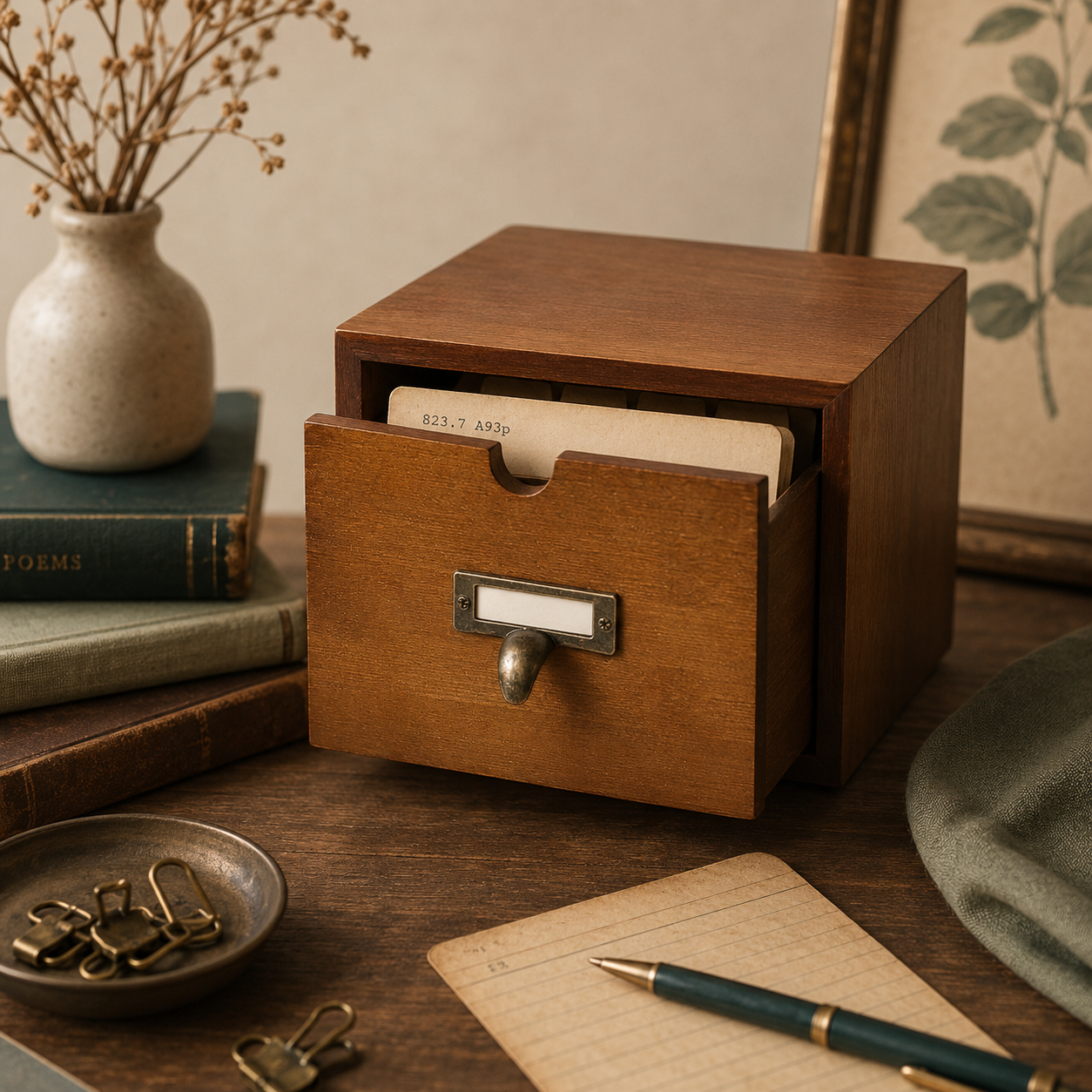
Wooden card catalog drawer with dividers for storing printed catalog cards.

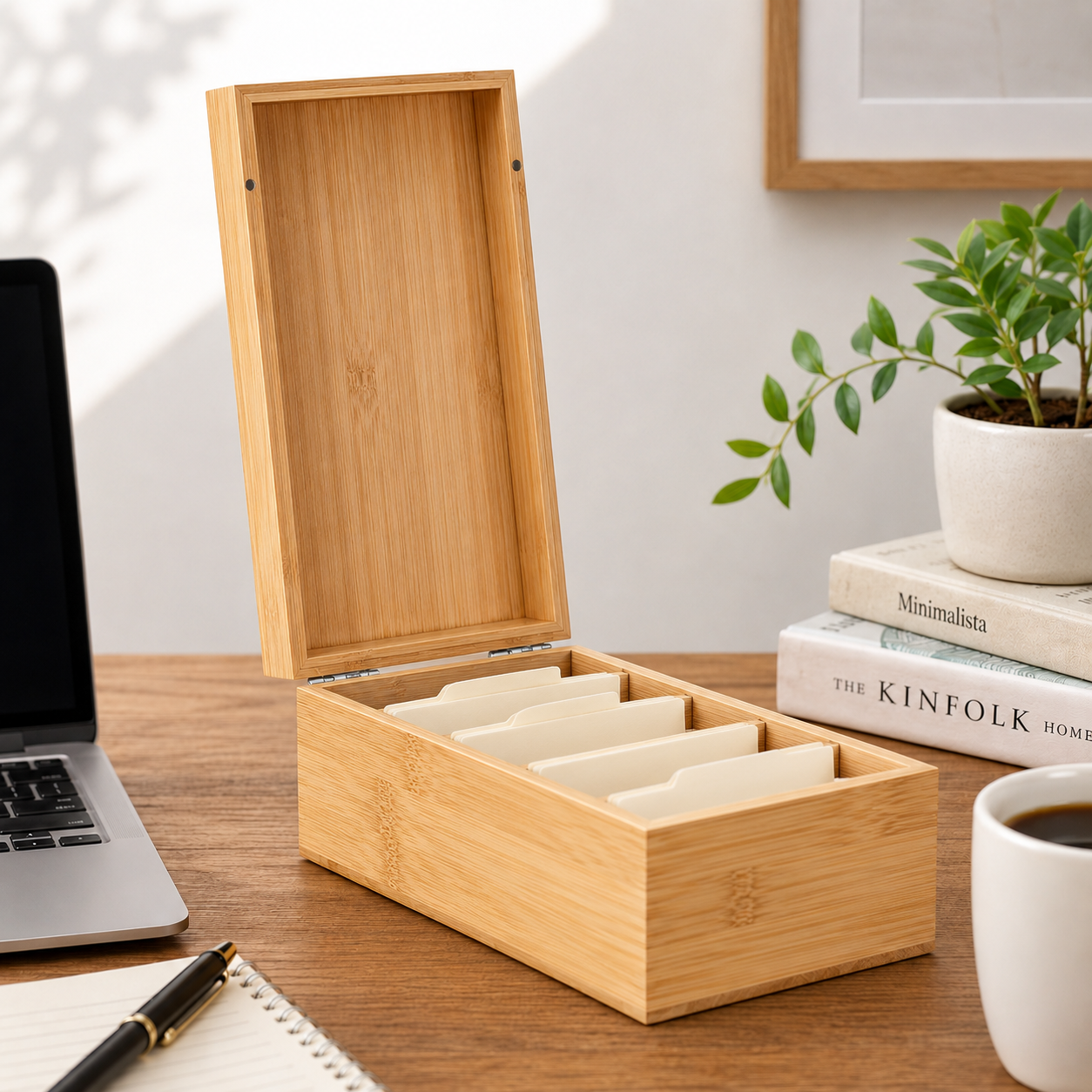
A clean desktop box for sorting larger catalog card collections.
Ready to start your catalog?
Generate printable library catalog cards for every book in your home library.
Open the generator