
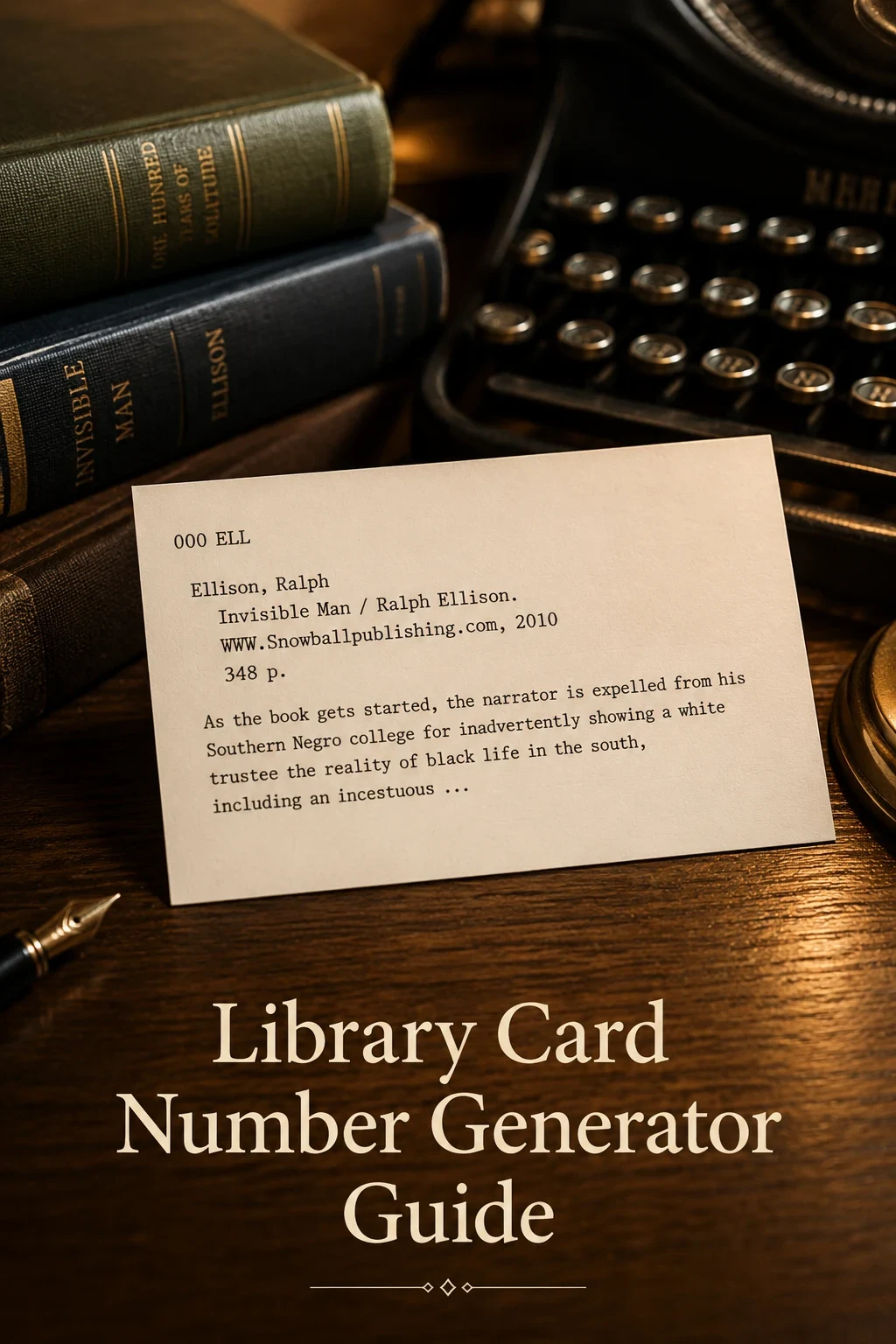
Search "library card number generator" and you will find two very different needs hiding under one phrase. One is numbering the books in a home library - we cover that in our private collection numbering guide. The other, and the one most people actually mean, is the number printed on the card itself: the patron-style ID that makes a library card look and feel real. This guide is about that number - what it looks like, where it comes from, and how to generate one for your own card.
Want to make your own? Try the free generator
What Is a Library Card Number?
A library card number is the unique identifier printed or barcoded on a patron's card. Real public libraries typically issue a 14-digit number starting with a shared prefix (many U.S. systems use numbers beginning with 2 or 21 followed by a long patron sequence), formatted for a barcode scanner rather than a human. Older and smaller libraries, school libraries, and classroom systems often use shorter, friendlier formats instead - four to eight digits, sometimes with a letter prefix for a branch or grade.
Why People Want to Generate One
A blank "Card Number" field looks unfinished. Adding a number - even a fictional one - is what turns a name and a due-date box into something that reads as a genuine library card. People generate one for:
- A custom or vintage-style library card made as a gift
- Prop cards for photography, theater, or film sets
- Classroom "librarian for the day" activities and homeschool projects
- Scrapbook, junk journal, and craft pages that borrow the library aesthetic
None of these need a number that connects to a real library system. They need one that looks plausible.
What Makes a Number Look Realistic
A convincing library card number follows a few simple habits real libraries use:
- Consistent length - pick a digit count and stick to it across a whole batch of cards
- A shared prefix - a leading digit or two that stays the same, the way a real system's branch or issuing code would
- No obvious pattern - avoid 0000001, 1234567, or anything that reads as a placeholder
- Vintage cards skip the barcode - a typed or hand-stamped number in the corner fits older card styles better than a scannable barcode
Generating a Card Number With the Free Tool
The free library card generator on this site does not make up a number for you. Whatever you type into the Entry / Call Number field prints in the upper-left corner, the same spot a real library would use. For a realistic look, copy the pattern of a real call number, like 823.7 A93p, or use Look up book details to get a suggested starting number from the book's category and author. Making a batch for a classroom set or a themed project? Keep a running list of the numbers you have used so every card stays unique.
Making Your Own Numbering System Instead
For a card catalog project rather than a single card, you may want numbers that mean something - tied to a shelf, a section, or an acquisition order. That is a different task from generating a card number, and our numbering guide for private collections walks through three systems that hold up over hundreds of books.
Helpful supplies for printable catalog cards
Some links on this page are affiliate links. If you purchase through them, we may earn a small commission at no extra cost to you.
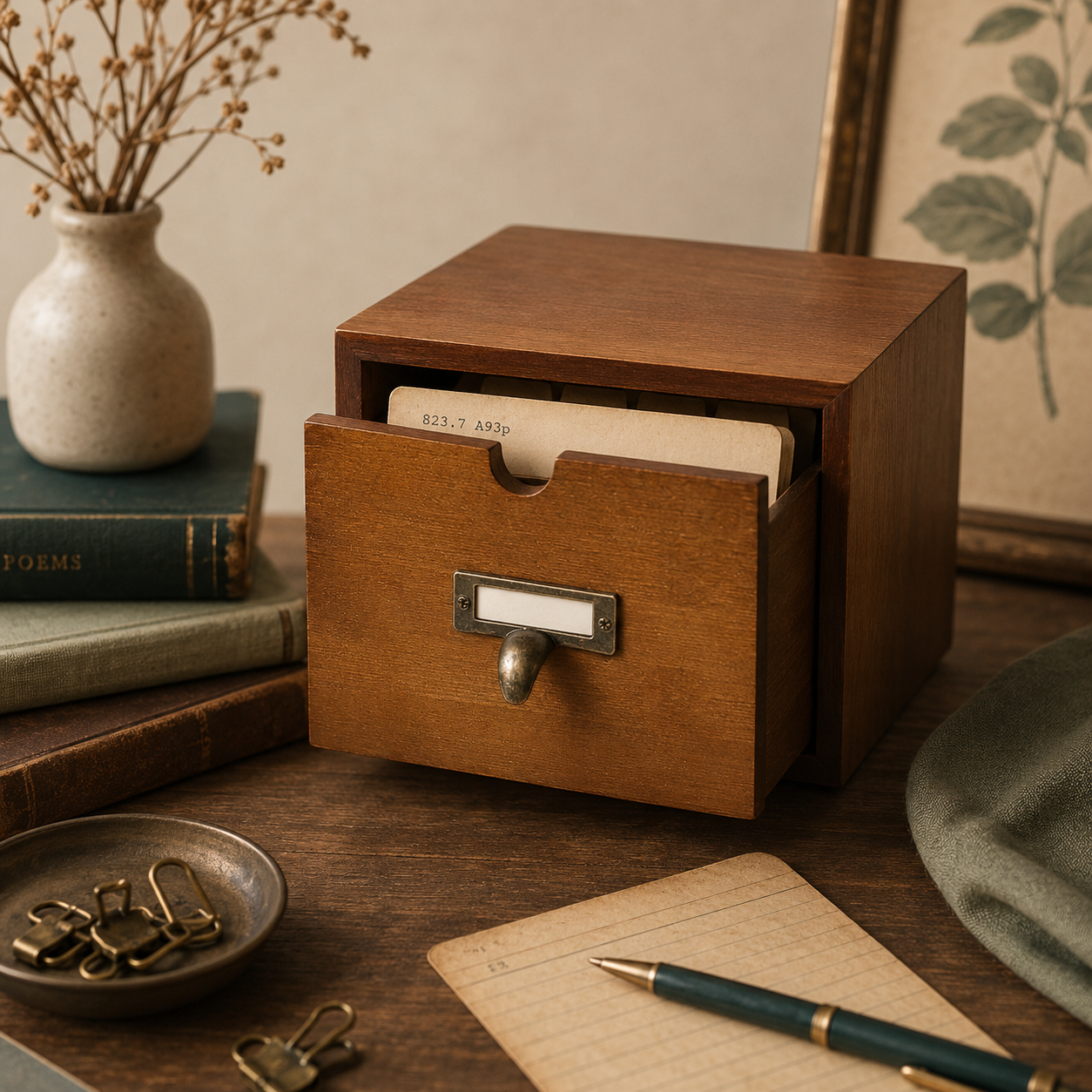
Wooden card catalog drawer with dividers for storing printed catalog cards.

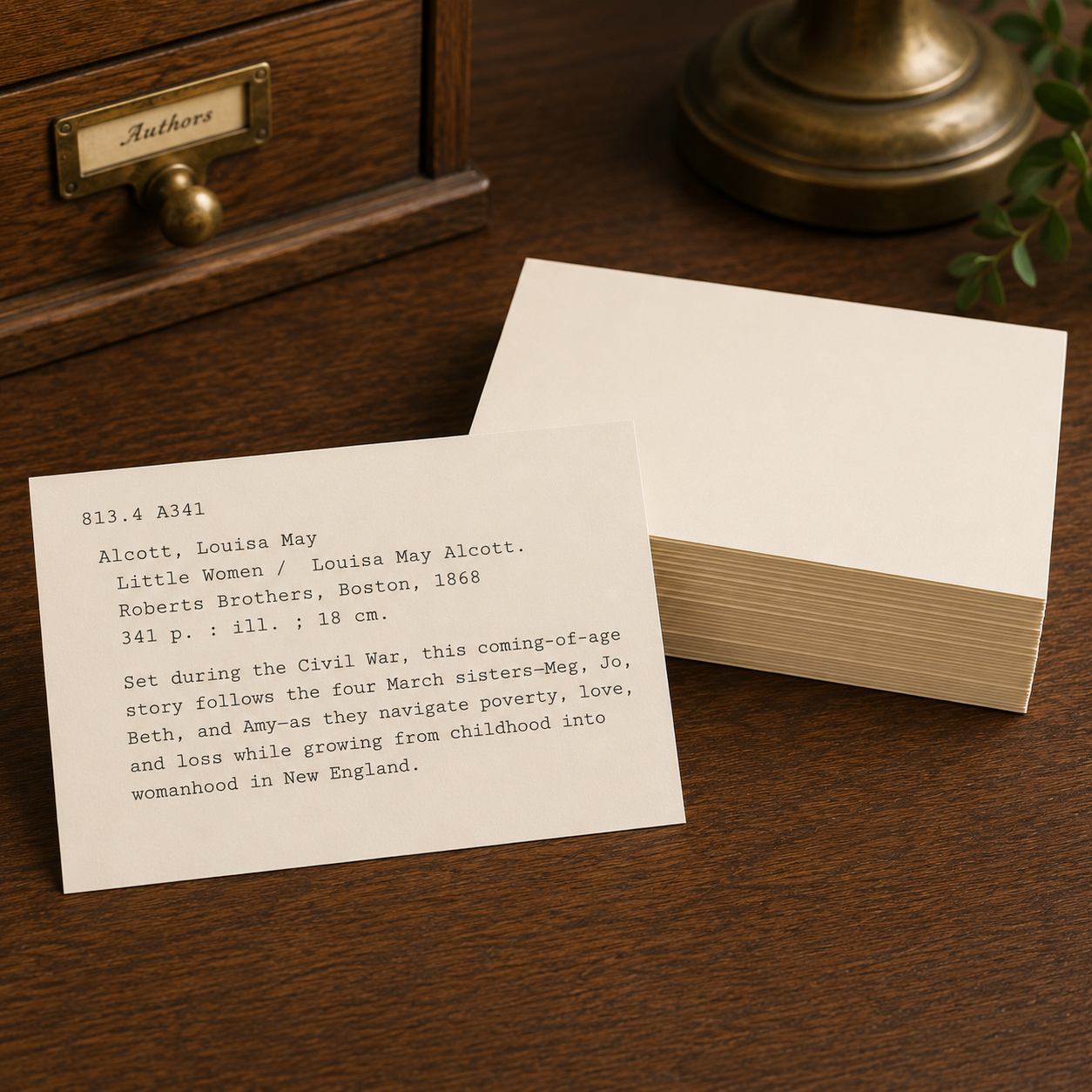
Heavy blank cards for printing catalog cards with a warm vintage look.
Generate your card number
Use the free library card generator to create a card complete with a realistic card number.
Open the generator