
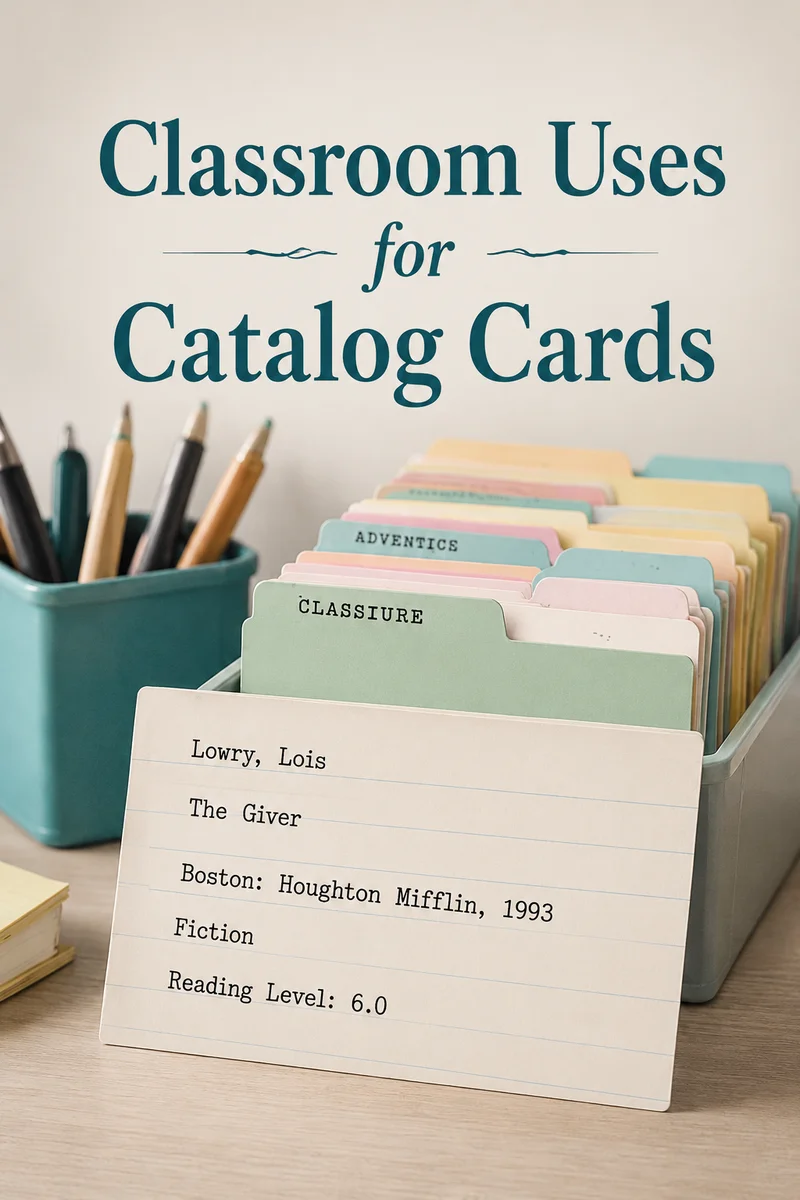
Most teachers meet the catalog card exactly once, in a school library, attached to a book, in service of finding that book again. It is a narrow job for such a useful little rectangle. A catalog card is really just a structured index card: three by five inches, ruled, with fields that invite a specific kind of thinking. Once you stop treating it as library equipment and start treating it as a classroom tool, it turns out to be one of the most flexible things you can print for free.
Want to make your own? Try the free generator
Start With the Classroom Library Check-Out System
The obvious use is still the best one, so it is worth doing properly. A classroom library with fifty or sixty books does not need software. It needs a card for each title and a box to keep them in. Print a card per book from the free catalog card generator, tuck it inside the front cover, and set up two dividers in a box: OUT and IN. A student who borrows a book pulls the card, writes their name and the date on the back, and files it under OUT. When the book comes home, the card goes back to IN.
What makes this worth the setup time is not tracking. It is ownership. Students who physically move a card understand that a book left their shelf, and they return books at noticeably higher rates than classrooms that rely on a clipboard sign-out sheet. The system also survives a substitute teacher, a power outage, and a class that has not yet earned device privileges.
What Goes on a Classroom Vocabulary Card?
A catalog card format is unusually good for vocabulary work because it forces separation of parts. The title line takes the word. The author line takes the part of speech or the root. The body takes a student-written definition and a sentence. The call number line takes the unit or week number, which means the cards self-sort by when they were learned.
Keep them in a box on a shelf and the box becomes a growing record of the year's language. Students can pull cards to review before an assessment, and you can pull a handful at random for a warm-up. Because the cards are uniform and filed, review costs no prep. You reach into the box.
Student Book Recommendations
Give each student a blank catalog card when they finish a book and ask them to fill it out as if they were the librarian who catalogued it: title, author, a one-sentence summary, and a rating or a note about who would like it. File the finished cards alphabetically in a box near the classroom library.
The result is a peer recommendation system that grows all year and requires nothing from you after the first explanation. Students browsing for a book pull cards written by classmates, which is far more persuasive than any list you could post. Cards for the same title accumulate behind one another, so a popular book quietly develops a stack of endorsements.
Exit Tickets, Question Cards, and Discussion Prompts
A catalog card makes a better exit ticket than a slip of scrap paper because it is durable, uniform, and easy to sort. Collect them at the door, flip through them in two minutes, and sort into three piles: got it, almost, reteach. The stiffness of cardstock means the pile stays organized on your desk instead of drifting into the general paper current.
The same cards work as anonymous question cards. Every student writes one question about the lesson, including students who understood everything. Shuffle and read a few aloud. Because the format looks official rather than personal, students tend to ask more honest questions than they do on a signed worksheet.
Research Skills and Source Cards
Teaching research with catalog cards gives students a physical model of what a database record is. Have them build a card for each source they consult, listing author, title, publication, and where they found it, and the abstract idea of a citation becomes a concrete object they can hold and sort. Students who build source cards before writing produce noticeably better bibliographies, largely because they cannot lose a source they already carded.
For younger students, this doubles as an introduction to alphabetical filing, a skill that has quietly disappeared from most curricula and still shows up on standardized tests.
Pick One and Start There
Whatever you choose, print on real cardstock rather than copy paper. Classroom cards get handled dozens of times, and paper cards go soft and dog-eared inside a month. Give them a home, too. A box with dividers on a low shelf, at student height, is the difference between a system students maintain and a stack of cards you end up sorting alone on a Friday afternoon.
You do not need all ten uses. Choose the one that solves a problem you already have this week: the classroom library that keeps losing books, the vocabulary review you keep rebuilding from scratch, the exit tickets that end up in a drawer. Print thirty cards, try it for two weeks, and let the rest arrive on their own. The best classroom systems are the ones that started small enough to survive a busy month.
Helpful supplies for your classroom card system
Some links on this page are affiliate links. If you purchase through them, we may earn a small commission at no extra cost to you.
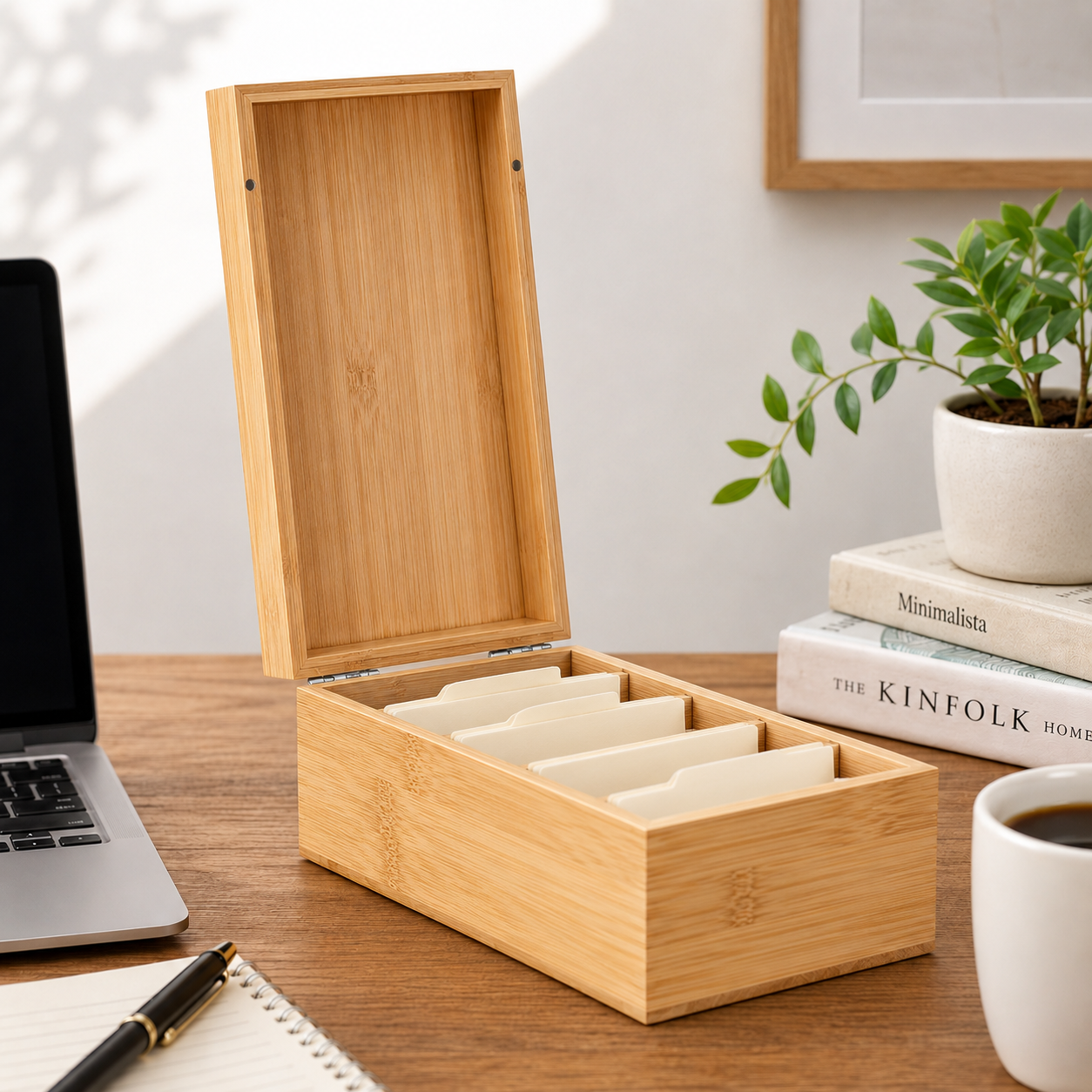
A clean desktop box for sorting larger catalog card collections.

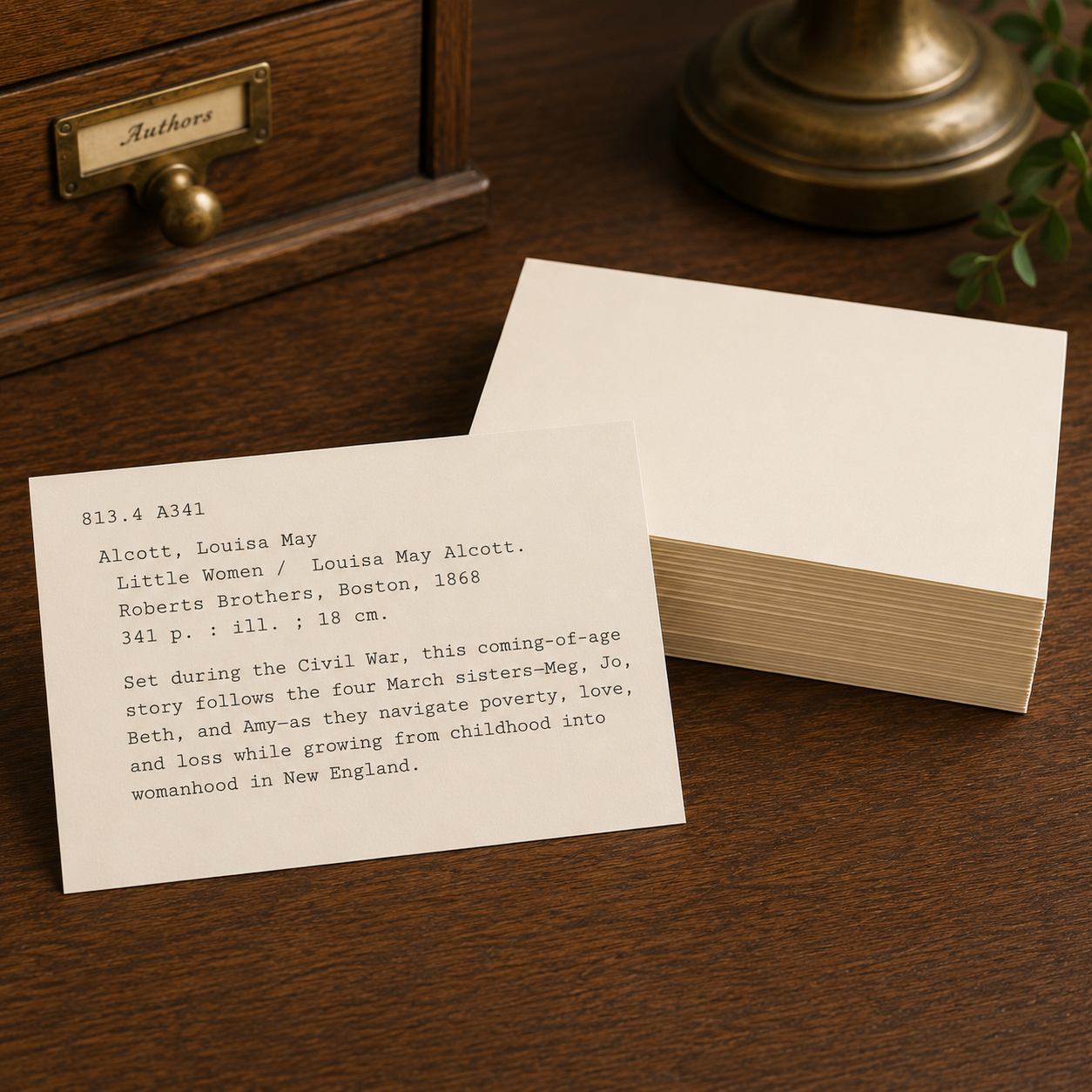
Heavy blank cards for printing catalog cards with a warm vintage look.
Ready to print cards for your classroom?
Print as many catalog cards as you need, free, in your browser, no sign-up required.
Open the generator