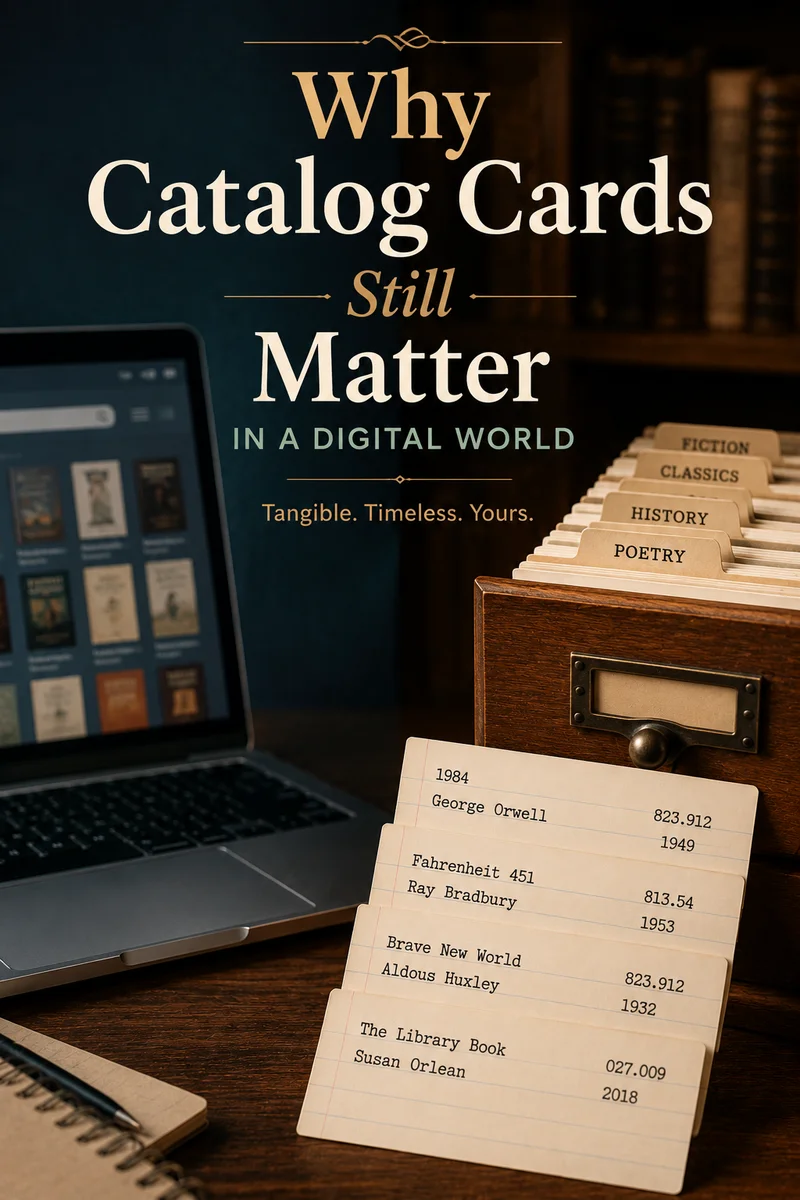
Catalog cards still matter because they do something an app cannot: they make you slow down and write down what a book means to you. A library app can list ten thousand titles in a blink. A card holds one title, in your handwriting or a typewriter font, filed in a drawer you can open with your hand. That small act of recording is the reason the cards have outlasted the computers that replaced them.
Want to make your own? Try the free generator
What can a catalog card do that a library app cannot?
An app is built to find things fast. A card is built to be noticed. When you flip through a drawer, you land on books you forgot you owned, and the card next to the one you wanted sometimes turns out to be the better read. Search boxes only answer the question you already thought to ask.
A card also has room for the human part. Apps keep fields for title and author. On a card you can add where you found the book, who lent it, and the rainy weekend you finished it. Those details are the first thing to vanish when a service shuts down or an account gets lost.
Why does a paper record feel different from a spreadsheet?
Part of it is touch. Cardstock has weight, the corners soften with handling, and a typed line looks permanent in a way a cell in a grid never does. Part of it is size. One card is one book, so each title gets its own small moment instead of a row among hundreds.
There is a memory effect, too. Writing out an author and a call number by hand or setting it in a font you chose makes it stick. People who catalog their shelves often say they know their collection better after a single afternoon with a stack of cards than after years of owning it.
Do you have to choose between paper and digital?
No. The two work well together. Keep your running list in whatever app you like, then print cards for the books that matter most: the family copies, the signed editions, the childhood favorites. The app is your inventory. The cards are your keepsakes. If you are weighing the two approaches, our comparison of a physical library catalog and a digital one lays out the trade-offs.
Cards also survive a dead battery. A drawer of printed cards works during a power cut, on a camping trip, and in a house with no Wi-Fi.
How do you start a card catalog at home?
Start small. Pick ten books you love and make a card for each. The free catalog card generator lets you look up a title or ISBN, fill in the remaining fields, and choose a style, from Vintage Typewriter on Aged Paper to a crisp modern serif. Download the card as a PDF, print it on cream cardstock, and trim the edges.
- Use a real Dewey number if you like accuracy, or invent a shelf code that makes sense to you.
- Use the notes line for the story behind the copy on your shelf.
- File the cards alphabetically by author, or by genre, or by color. Your drawer, your rules.
Once you have a first handful, you will want to see them lined up. A small wooden drawer with dividers turns a pile of cards into something that looks like it belongs in a reading nook.
The people who keep a card drawer going
Mostly people who like to hold their hobby in their hands. Book club members keep one card per month's pick. Parents file a card for each picture book a child outgrows. Writers keep cards for the books on their desk. Some people catalog a late grandparent's paperbacks, and the notes line becomes the place where the memories go. The cards matter because the people who make them do.
Supplies for your own card catalog
Some links on this page are affiliate links. If you purchase through them, we may earn a small commission at no extra cost to you.
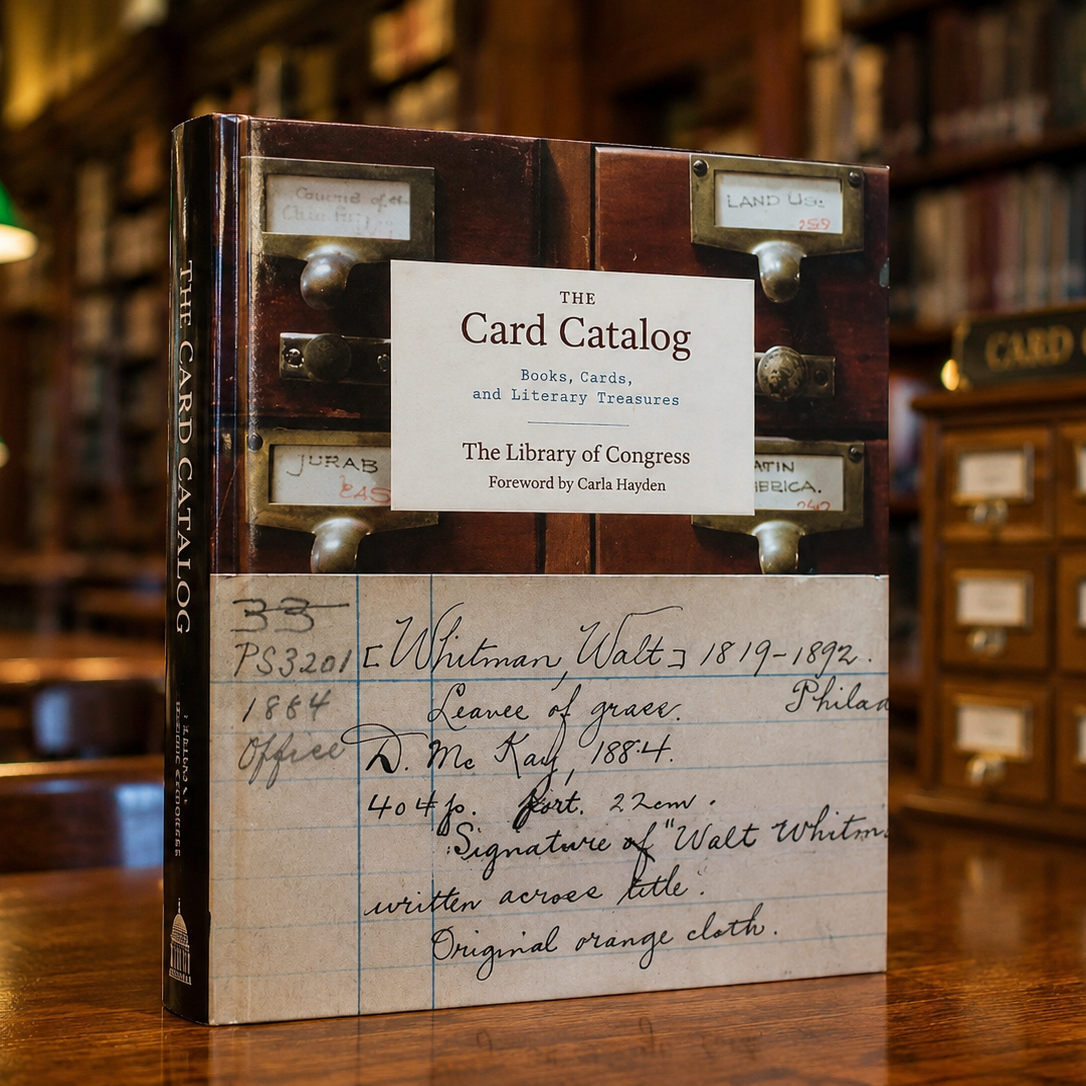
A handsome Library of Congress book for anyone who loves catalog cards.

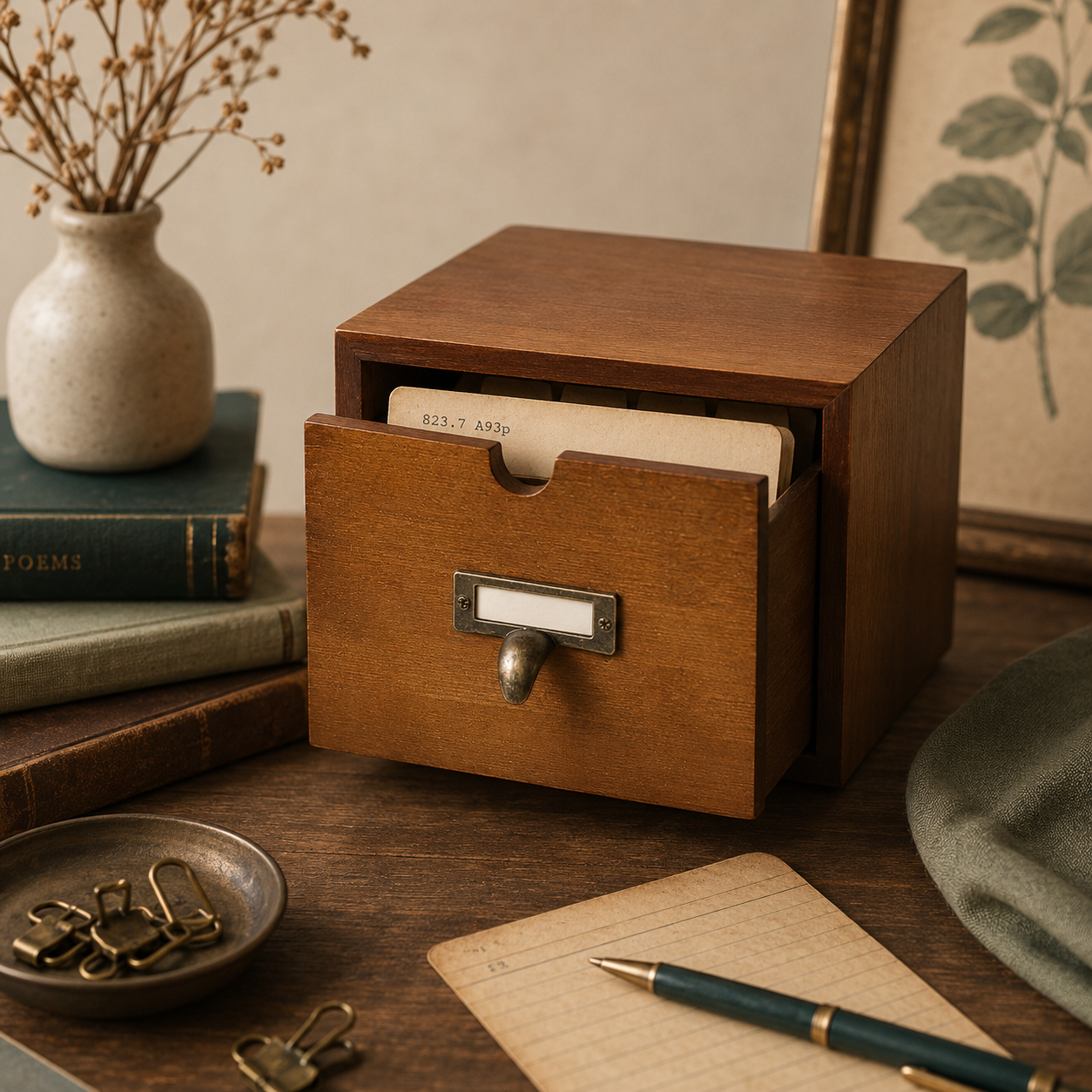
Wooden card catalog drawer with dividers for storing printed catalog cards.
Make a catalog card for a book you love
Look up the book, add your own note, and print a keepsake card in minutes.
Open the generator